Email Address: contact@softwareistic.com | Phone Number: (844) 970-3900


Email Address: contact@softwareistic.com | Phone Number: (844) 970-3900


Twitter:The competition between progressive web apps and #NativeApps has been prevalent for many years, however #PWAs are emerging successful with the latest trends and technological patterns in mind. Read more about it here:
Facebook: In 2025, progressive web apps are creating waves through the technological world, paving way for easier application access, cost effective in development, and a lot more. Read more about the latest trends, its competition with native apps, and other similar aspects here:
LinkedIn: Technology is developing, and so is the way we access apps. Check out how progressive web apps are replacing native apps, and who is going to win the race in 2025:
Instagram: Are you tired of the never ending permissions, formalities, and conditions that come with native apps? Read all about progressive web apps and how they are making waves in the technological world today! Click on the link in our bio for more information!
The Progressive Web App (PWA) market is gaining serious traction in 2025, valued at $1.56 billion and projected to grow at a steady Compound Annual Growth Rate (CAGR) of 15.3% through 2033. For startups and small-to-midsize enterprises (SMEs), this surge is more than a trend—it's a signal of shifting priorities in digital product development.
PWAs are delivering on key fronts: they offer a unified experience across devices, reduce development overhead by eliminating the need for multiple codebases, and provide offline access through advanced browser technologies.
These benefits are proving especially valuable in sectors like e-commerce, media, travel, and finance, where mobile usability and speed are non-negotiable. Businesses are turning to PWAs not just for aesthetic or performance gains, but because they represent a smarter, leaner investment. The massive switch from native apps to PWAs can lead to revolutionary changes in how people use applications on their phones.
Let’s dig deeper into the similarities, the differences and which of the two will be dominating the markets in 2025.
Native app development involves building mobile applications specifically for a single operating system—either iOS or Android. These apps are written in platform-native languages like Swift for iOS and Kotlin or Java for Android.
Think Spotify, Uber, or Instagram—these apps are designed to leverage the full power of the device, from real-time GPS and high-performance graphics rendering to secure biometric logins and offline storage.
For businesses targetinghealthcare apps, real estate apps, fitness apps, or game app development, where high performance and seamless integration with device hardware are essential, native apps remain the gold standard.
Features like:
However, there’s a cost to this performance.
A professional app development company building native applications will often need to maintain two separate codebases (one for iOS, one for Android), resulting in doubled development time, increased app maintenance services requirements, and longer time-to-market—something that can slow downyourapp development or delay MVP development entirely.

On the flip side, Progressive Web Apps are built using web technologies like HTML5, CSS, and JavaScript. These apps run in the browser but feel like mobile apps—offering installable icons, push notifications, and offline functionality. The gap between PWAs and native apps has narrowed significantly by 2025, thanks to advances in cloud application development, service workers, and browser APIs.
For startups and SMEs aiming to validate a product quickly—whether it’s an e-commerce app, educational app, or a CRM development prototype—a PWA can offer a pragmatic solution. PWAs also shine in cross-platform app development because the same codebase works across desktop and mobile browsers, drastically reducing development and maintenance overhead.
Businesses that use PWAs don’t need to go through app store approvals, which means faster launch cycles—a great way to deal with tight deadlines and limited budgets. This approach is especially appealing in fast-paced sectors such as on-demand, social media, and chatbot app development, where digital transformation services must operate at the rapid speed of a startup.
Progressive Web Applications (PWAs) have emerged as a fascinating alternative to traditional native apps, especially for startups and small to medium-sized enterprises (SMEs) seeking efficient, cost-effective, and scalable digital solutions. The global PWA market is projected to reach $2.8 billion by 2025, reflecting a significant shift towards this technology.
Keep reading to explore the edge these technologies can provide to small scale businesses, early start ups, and more!
One of the standout features of PWAs is their ability to function offline or in low-network conditions. By leveraging service workers—scripts that run in the background—PWAs can cache essential resources, allowing users to access content without an active internet connection.
This capability is particularly beneficial for businesses in regions with inconsistent connectivity, ensuring uninterrupted user engagement and access to services.
Performance is a critical factor in user retention. Google reports that 53% of users abandon sites that take longer than three seconds to load. PWAs address this by utilizing service workers to manage caching and resource loading efficiently, resulting in faster load times and smoother interactions.
For instance, Twitter's PWA, Twitter Lite, achieved a 65% increase in pages per session and a 20% reduction in bounce rate, demonstrating the impact of improved performance on user engagement.
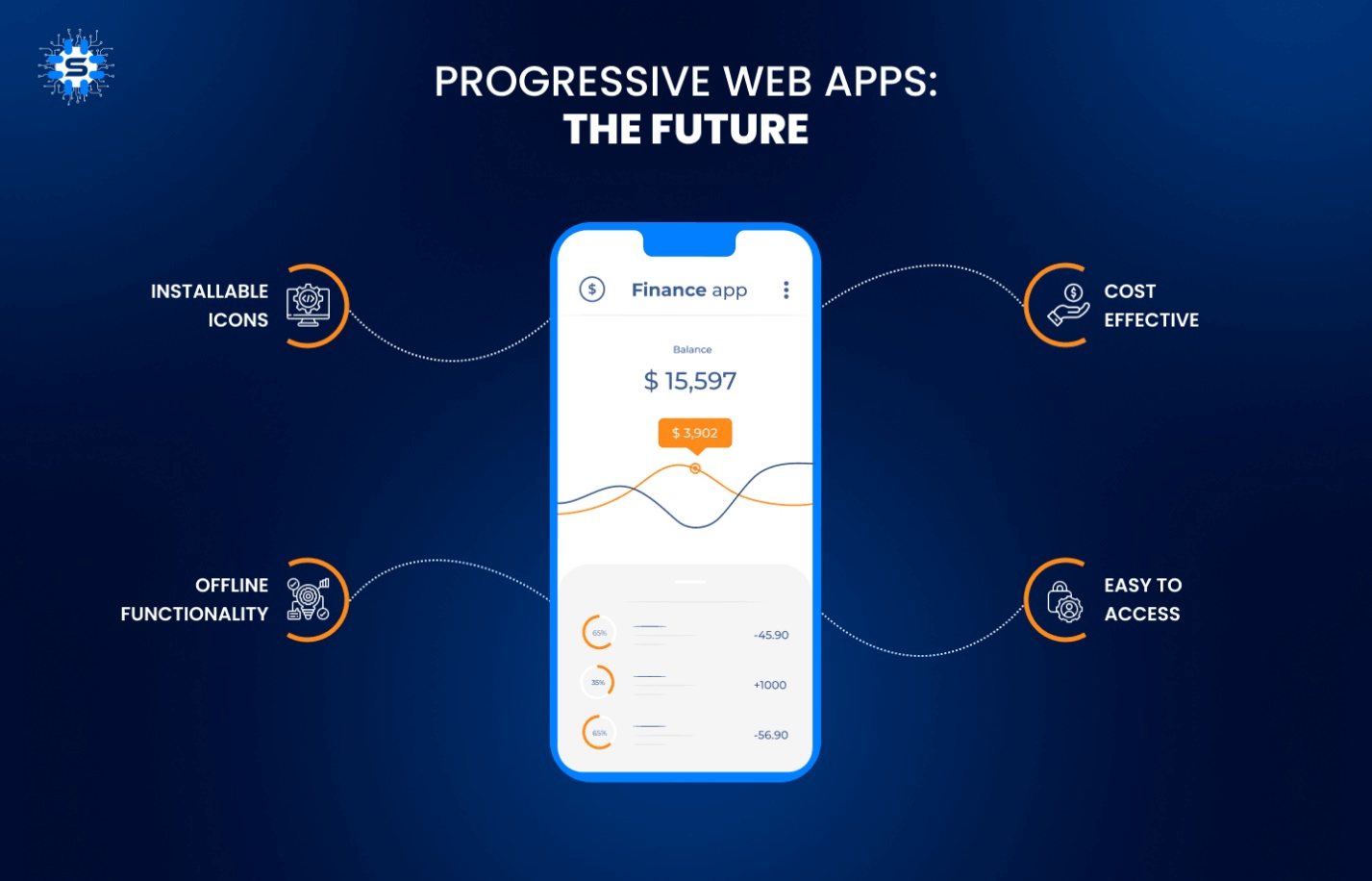
Unlike native apps, PWAs do not require distribution through app stores, eliminating the need for approval processes and associated fees. Users can access PWAs directly through web browsers, and updates are applied automatically without requiring user intervention.
This streamlined approach reduces development and maintenance costs, making PWAs an attractive option for businesses aiming for rapid deployment and iterative improvements.
Modern PWAs have evolved to incorporate features traditionally associated with native apps. They can send push notifications, access device hardware like cameras and GPS, and be installed on a user's home screen, providing a more integrated and engaging user experience. These capabilities enable businesses to deliver rich functionalities without the complexity of native app development.
In markets where data costs are a concern, PWAs offer a significant advantage due to their lightweight nature and efficient data usage. For example, Tinder's PWA reduced the app size from 30 MB to just 2.8 MB, making it more accessible to users with limited data plans.
This efficiency not only broadens the potential user base but also enhances the overall user experience by reducing load times and data consumption.
PWAs provide businesses with the freedom to distribute their applications without relying on app stores, avoiding associated fees and restrictions. This independence allows for greater flexibility in app updates and feature rollouts, enabling companies to respond swiftly to market demands and user feedback.
Moreover, it simplifies the user acquisition process, as users can access the app directly through a URL without the need for downloads or installations.
For startups and SMEs navigating tight launch windows, limited budgets, or early-stage validation, Progressive Web Apps offer a compelling solution. They’re fast, lightweight, and cost-efficient, with the ability to deliver engaging, app-like experiences across devices without the overhead of app stores or duplicated development.
At Softwareistic, we ensure you make that decision strategically—not just technically. Whether you're looking for custom software, an e-commerce app, or MVP development, or want to build a scalable cloud-based application, we offer a complete range of app consulting services.
Schedule a consultation now and discover what a professional app development company can really do to help scale your business!
Send us your details. We are here to answer your questions.