Email Address: contact@softwareistic.com | Phone Number: (844) 970-3900


Email Address: contact@softwareistic.com | Phone Number: (844) 970-3900


Facebook: A custom software has become essential for business success. But, obtaining one can be tricky. Check out whether businesses these days are choosing to buy or build their own software to improve efficiency:
Twitter: #BuildingSoftware for your business can provide you with an edge like no other. Read all about the different advantages and drawbacks of building your custom software today:
LinkedIn: Businesses are growing rapidly, and therefore need to stay up-to-date in all regards. Some businesses are choosing to buy custom software, while others are building them in-house. Check out our blog to see which one is the contributing factor to business success in 2025!
Instagram: Are you thinking about building your own custom software? Check out our blog where we discuss whether you should buy or build custom software for market edge. Click on the link in our bio for more information, today!

In 2025, small and medium-sized enterprises (SMEs) face a pivotal decision: should they build custom software tailored to their unique needs or buy off-the-shelf solutions that promise quick deployment? This choice is more than a technical consideration; it's a strategic move that can significantly impact your agility, scalability, and competitive edge.
The digital transformation wave has not spared SMEs. As cloud computing, artificial intelligence, and mobile technologies become increasingly integral to business operations, organizations are re-evaluating their software strategies to stay competitive. According to a report by the Financial Times, European companies and public sector organizations are projected to spend $1.1 trillion on IT in 2025, a 9% increase from 2023, highlighting the escalating investment in digital solutions.
Here’s a research-backed guide for SMEs to navigate the build vs. buy dilemma, ensuring informed decisions that align with business goals and market demands.
For SMEs looking to future-proof operations and drive innovation, building software in-house is a strategic path worth serious consideration. This approach focuses on developing custom software solutions that align precisely with a company’s operational needs, technical requirements, and long-term vision.
Historically, in-house builds required significant engineering resources and time. But the emergence of low-code/no-code platforms and Generative AI development tools has made custom software development more accessible—even for non-technical teams. The build route isn’t just for tech giants anymore. It's increasingly viable for SMEs with ambitious roadmaps and unique workflows.
When you build in-house, you design exactly what you need, nothing more, and nothing less. You’re not forced to compromise on must-have features or mold your business processes around a rigid commercial solution. Whether you’re developing a cross-platform app for customer engagement, an internal CRM tool, or a cloud-based enterprise app, building gives you complete creative and functional control.
This flexibility is especially critical in industries where small process changes can significantly impact outcomes—think healthcare app development, logistics solutions, or financial platforms. Custom builds also allow for tight integration with existing systems, like ERP platforms or proprietary APIs, ensuring seamless operations.
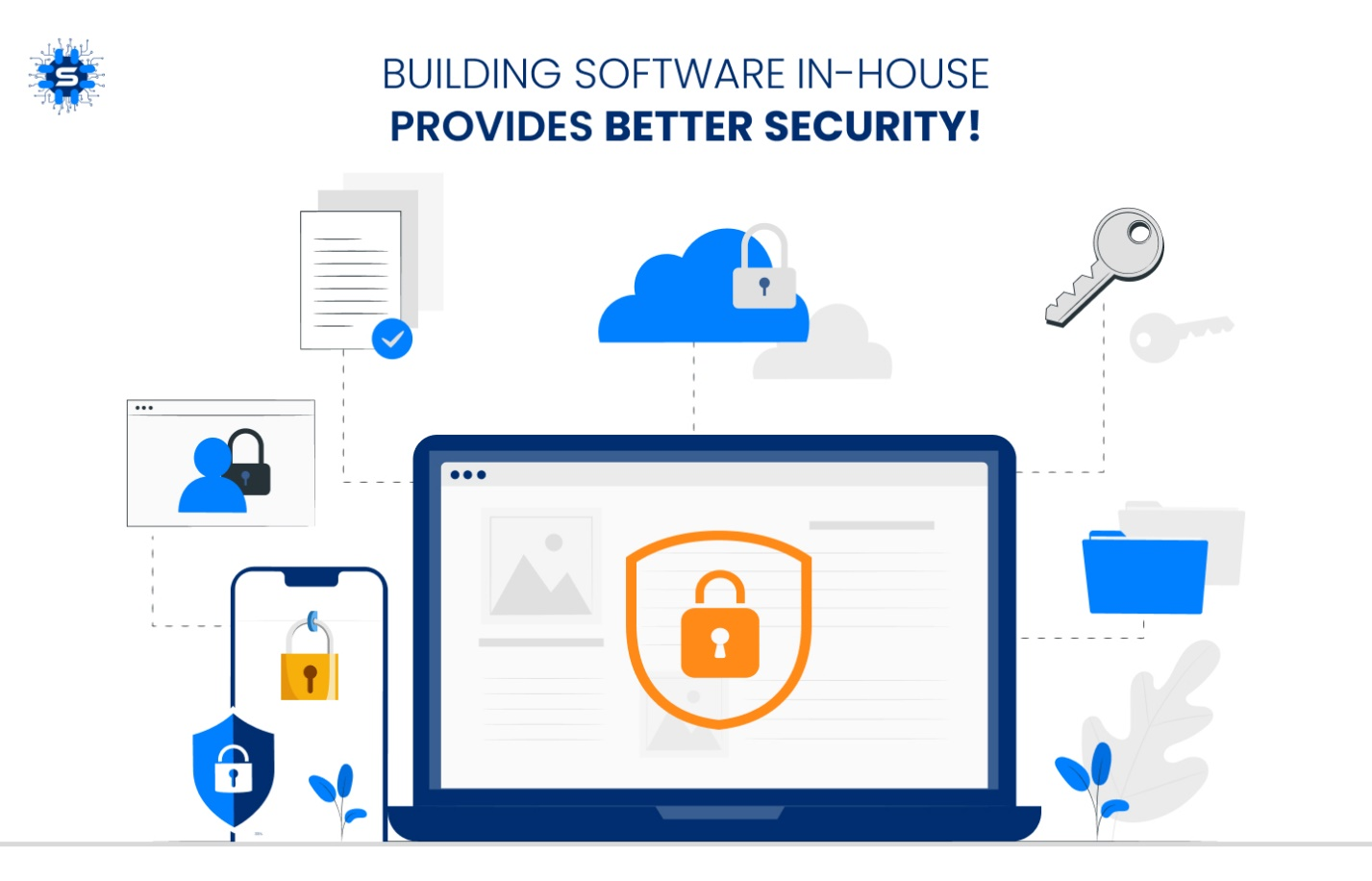
For businesses in finance, healthcare, or other regulated industries, off-the-shelf solutions can raise red flags. You don’t always control where or how your data is stored. Worse, you may be subject to third-party data practices and vulnerabilities.
Building your own software puts data ownership and security architecture in your hands. You can implement the exact compliance protocols your business demands—whether that’s HIPAA, GDPR, or industry-specific standards.
It’s also worth noting that SaaS platforms are frequent targets for cyberattacks, simply because of their widespread use. If your company deals with sensitive information or considers data a core strategic asset, the security advantage of building in-house can’t be overstated.
Custom software can become a strategic moat. When you own your technology stack, you’re not just another player—you’re potentially setting the bar. A frequently cited example is TikTok: its proprietary recommendation algorithm, estimated to be worth over $100 billion, is a cornerstone of its market dominance.
As a rule of thumb: “Buy for parity, build for differentiation.” If software can be the thing that sets your business apart—be it in user experience, performance, analytics, or automation—investing in a custom solution is a forward-thinking choice.
For SMEs with product-market fit and growing ambitions, building in-house can pay off handsomely. You gain intellectual property, better resilience, and stronger defensibility against competitors.
Choosing between building custom software or purchasing off-the-shelf solutions is a pivotal decision for SMEs. This choice impacts not only immediate operational efficiency but also long-term scalability and competitiveness. To navigate this decision effectively, it's essential to consider both strategic frameworks and practical evaluation criteria.
Gartner’s Pace-Layered Application Strategy offers a structured approach to categorize applications based on their rate of change and business value. This framework divides applications into three layers:
Understanding where a potential application fits within this framework can guide the build vs. buy decision. For instance, Systems of Record are often best served by purchasing established solutions, while Systems of Innovation may benefit from custom development to achieve a competitive edge.
Beyond strategic frameworks, SMEs should assess several practical factors:
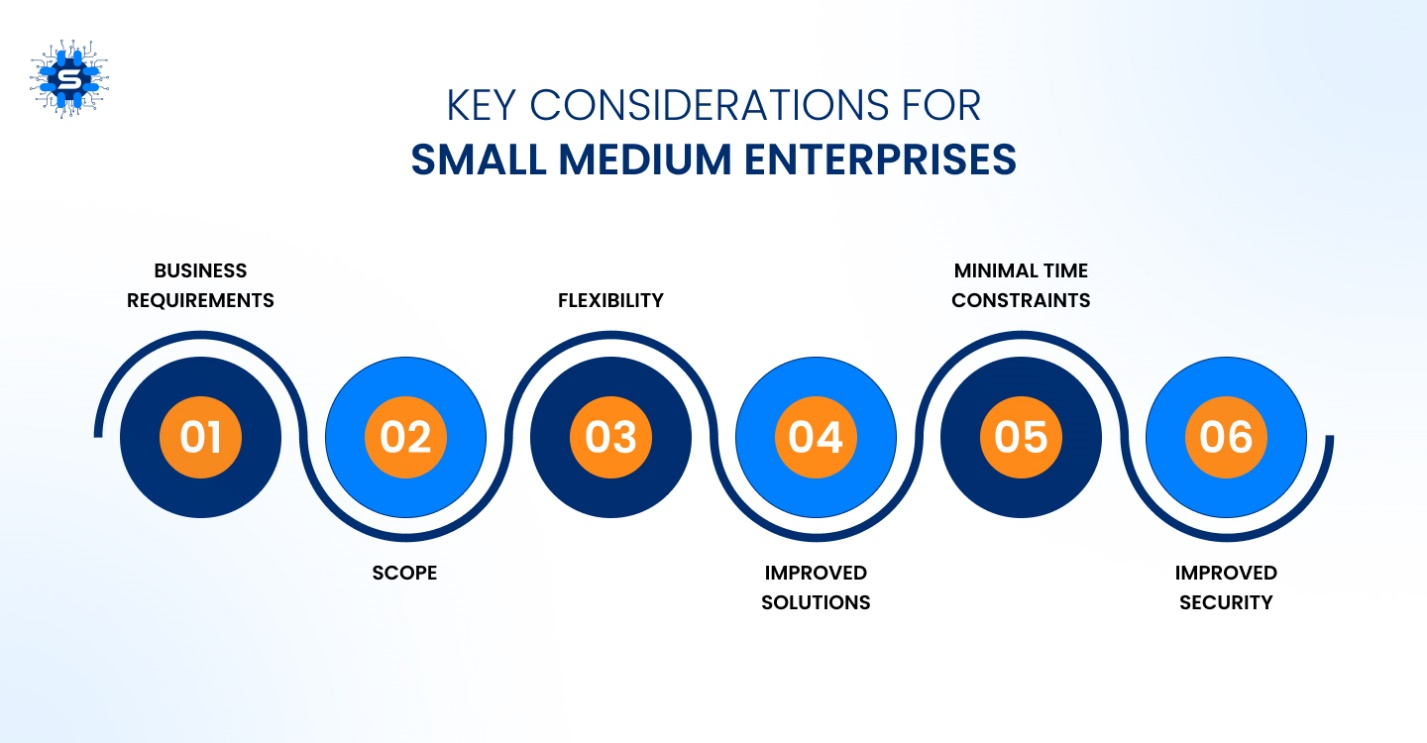
In some cases, a hybrid approach may be optimal. For example, integrating off-the-shelf software for general functions while developing custom modules for specialized needs can balance cost, time, and functionality.
The build vs. buy decision is no longer just about technical feasibility—it's a strategic choice that touches every layer of your business, from operations and customer experience to data control and long-term growth.
In 2025’s highly dynamic tech landscape, the right approach depends on what you’re solving for:
At Softwareistic, we specialize in helping SMEs like yours navigate the build vs. buy dilemma with clarity, speed, and confidence. Whether you’re launching an MVP, modernizing legacy systems, or building a fully custom platform from the ground up, we’re here to help you:
Your next software decision shouldn’t feel like a gamble. Call us now!
Send us your details. We are here to answer your questions.